CASE STUDY 01 PersonaChoice v3.0 / 2026.06.12

How closely can AI reproducehuman choice patterns?

We compared PersonaChoice with published LINE Research data across ad creative, taglines, and job values—testing generational differences and shifts caused by social context.

Bottom line

Reproduced real-survey patterns at 80–90%

Top-ranked items and Top-1 matches were scored under a consistent standard across three distinct decision themes.

86%

Top-1 match or at least 80% agreement

78%

Average agreement among top items

100%

Best Top-K agreement

7/7

Grade B or above

Validation method

Compare what ranked highest in the real survey

Top-K is adjusted to the number of options. We then compare how many top items—and whether the #1 item—match between the real survey and PersonaChoice.

Real survey data

Published LINE Research studies

Compared with

PersonaChoice v3.0

01AD CREATIVE

Capture what makes each generation want to click

The leading creative changed by age: younger audiences preferred personal, visual appeal, while older audiences responded to problem-focused messaging.

Real survey1,053 women
Options9 banners

Creative tested

LINE Research source ↗

Respondents chose the skincare banner they would be most likely to click.

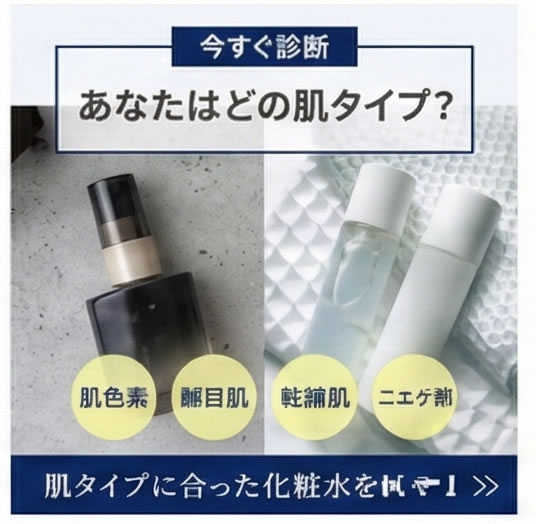
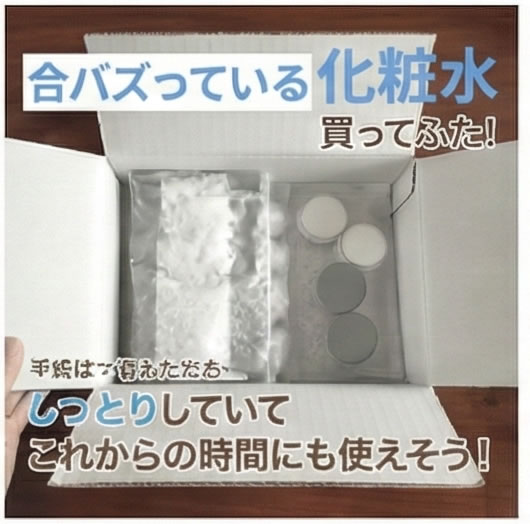
Skincare ad banner 1 1
Skincare ad banner 2 2
Skincare ad banner 3 3
Skincare ad banner 4 4
Skincare ad banner 5 5
Skincare ad banner 6 6
Skincare ad banner 7 7
Skincare ad banner 8 8
Skincare ad banner 9 9

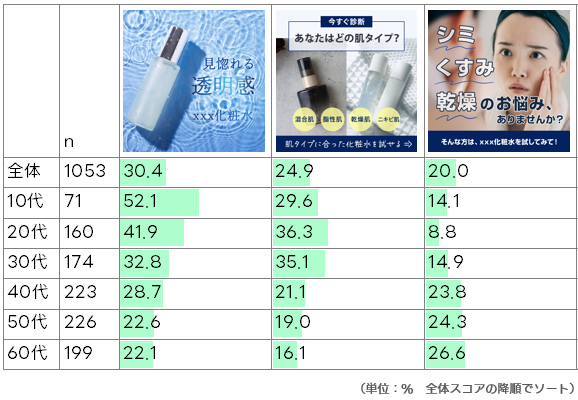
Real-survey result by age

Click preference by age and top three banners

Women in their teens and 20s

Personal and visually appealing creative ranked highest

Top-3 agreement 67%

Real survey TOP 3

1 Real survey TOP 3 rank 1
2 Real survey TOP 3 rank 2
3 Real survey TOP 3 rank 3

PersonaChoice TOP 3

1 PersonaChoice TOP 3 rank 1 24.0%
2 PersonaChoice TOP 3 rank 2 14.0%
3 PersonaChoice TOP 3 rank 3 13.0%

Women in their 50s and 60s

Correctly ranked the dark-spot message first

Top-1 match

Real survey TOP 3

1 Real survey TOP 3 rank 1
2 Real survey TOP 3 rank 2
3 Real survey TOP 3 rank 3

PersonaChoice TOP 3

1 PersonaChoice TOP 3 rank 1 28.0%
2 PersonaChoice TOP 3 rank 2 16.0%
3 PersonaChoice TOP 3 rank 3 13.0%
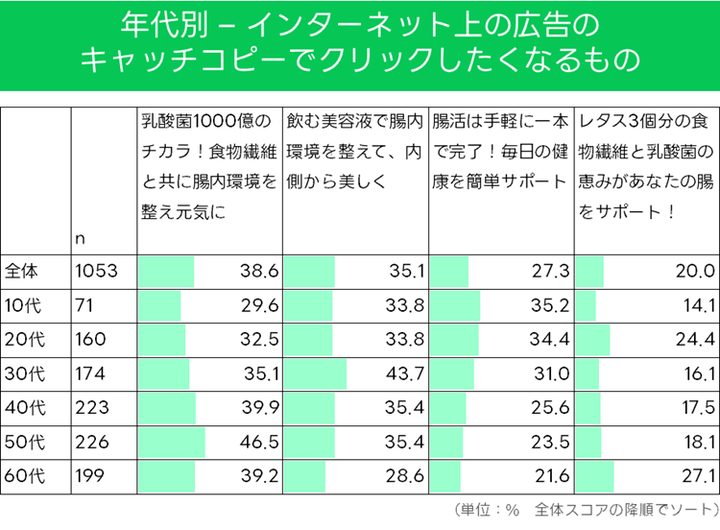
02TAGLINES

Identify the message that resonates with each target

The simulation reproduced a generational difference between ease and beauty for younger women and concrete, practical benefits for older women.

Real survey1,047 women
Options4 taglines

Four messages tested

LINE Research source ↗

OPTION 1

Easy gut care

Complete your daily gut care with one easy bottle.

OPTION 2

Beauty from within

Support your gut and bring out beauty from within.

OPTION 3

100 billion probiotics

Probiotics and fiber help support a healthy gut.

OPTION 4

Fiber of three lettuces

The benefits of fiber and probiotics support your gut.

Real-survey result by age

Tagline preference by age

Women in their 20s

Correctly identified “Easy gut care” as the most compelling

Top-1 match
#1

Easy gut care

43.0%
#2

Fiber of three lettuces

20.0%
#3

Beauty from within

19.0%
#4

100 billion probiotics

18.0%
View public report (JA) →

Women in their 60s

Reproduced the generational shift toward practical benefits

Top-3 agreement 75%
#1

Easy gut care

34.0%
#2

Fiber of three lettuces

29.0%
#3

100 billion probiotics

24.0%
#4

Beauty from within

13.0%
View public report (JA) →
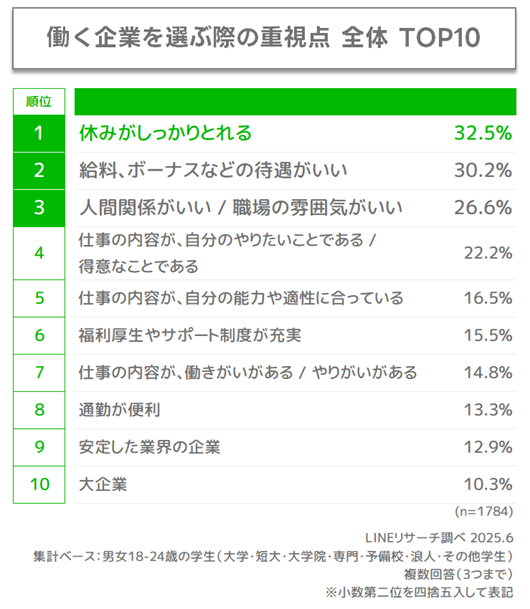
03JOB VALUES

Reproduce changes in priorities caused by social context

Adding inflation and a weak-yen environment moved compensation from seventh to second while keeping the core priorities recognizable.

Target18–29 years old
Options10 job conditions

What changed

COMPENSATION

#7 → #2

Economic context increased the relative importance of pay and bonuses.

Without added context

A simulation of general job priorities among young people

Top-5 agreement 80%
  1. 1A role suited to one’s abilities
  2. 2Reliable time off
  3. 3Work one wants or is good at
  4. 4Convenient commute
  5. 5Workplace relationships

With inflation and a weak yen

The same question with current economic conditions added

Top-5 agreement 100%
  1. 1Reliable time off
  2. 2Compensation and bonuses
  3. 3A role suited to one’s abilities
  4. 4Work one wants or is good at
  5. 5Workplace relationships

Evidence summary

Validation scoreboard

All seven principal comparisons achieved Grade B or above across creative, copy, and job-value decisions.

A × 2B+ × 3B × 2
ThemeAudience / conditionResultGrade
Ad creativeTeens–20sTop-3 agreement 67%B
Ad creative50s–60sTop-1 matchB+
Ad creativePopulation mixTop-3 agreement 100%A
TaglinesWomen in their 20sTop-1 matchB+
TaglinesWomen in their 60sTop-3 agreement 75%B
Job valuesNo added contextTop-5 agreement 80%B+
Job valuesEconomic contextTop-5 agreement 100%A
View evaluation method and grade criteria

Top-K: K is adjusted to the option count so chance agreement does not dominate the result.

Grades: A indicates 80%+ agreement with a Top-1 match, or 100% agreement. B+ and B recognize consistent agreement under the same rule.

What the evidence enables

Three practical ways to use PersonaChoice

01

Compare target segments

Test the same idea across age and other audience conditions before launch.

02

Accelerate hypothesis testing

Narrow creative and messaging directions before investing in field research.

03

Model a changing environment

Add market and social context to test how priorities may shift.

Conclusion

Know the direction people will choose
before you ask them.

Across three public studies, PersonaChoice reproduced the leading patterns in real survey data at 80–90%. Use it to sharpen the hypotheses you take into product, marketing, and research decisions.

For resident opinion surveys, see our 70–80% validation record →

Watch the validation overview